Wednesday, August 3, 2011

How to keep Seahorses in the Aquarium


In nature most seahorses are found in the lagoons and grass flats inside the reef. Because of this environment, seahorses may encounter larger variations in water temperature and salinity. Seahorses may adapt to a wider range of water conditions than the reef fish commonly kept in aquariums.


Seahorses should not be kept with other fish as tankmates. This is due to the fact that they cannot compete with the fast moving fish for food. They are best kept in a small (10-20 gallon) aquarium by themselves.

With the right aquarium set-up, proper feeding and care, seahorses may live for many years. Average age for many of the tropical seahorses is about 4-6 years. They will reach sexual maturity as early as 4 months, and pairs will readily spawn in aquariums. Seahorse reproduction is well known for having the male give birth to live young. Fertilization actually takes place in the female and then she passes the fertile eggs into the male pouch where they develop for two to four weeks, and are eventually released. Typically 50 to 150 juveniles may be born over the course of many hours.

Recently all Seahorses were placed on the Appendix II list of endangered species by CITES (Convention for the International Trade in Endangered Species). This severely restricts the legal import and export of seahorses

Deep Sea Aquarium Maintenance carries only tank raised seahorses and will deliver them to your home.  We also specialize in complete seahorse aquarium set-ups for your home or office.  Call 562 477-2219 for a free estimate.

Tuesday, July 26, 2011

Fish Wrangler - Los Angeles - Deep Sea Aquarium Maintenance

Patrick Wolovich owner of Deep Sea Aquarium Maintenance has been involved in the film industry for over a decade.  He has worked on feature films, TV series, and independent films as a cinematographer, motion control tech, and production design.  Patrick’s experience in the film industry and knowledge of aquariums gives him unique skills as a fish wrangler for Hollywood films, TV Series, and commercials.  Set Decorators and prop masters can depend on getting Patrick and his fish onto the set or location with very short notice and in a professional manner that sets the standard in the film industry.

Here is the short list of Film and TV Credits for Patrick

Volcano Feature Film
8 Mile Feature Film
28 Days later Feature Film
Garden State Feature Film
Day after tomorrow Feature Film
Frida Feature Film
Titanic Feature Film
Hash browns Feature Film
Stinkers Feature Film
ER TV drama
Louis & Clark Superman TV Series
Nightline News
Amaco Gas Station Commercial Series
Deena Dawn Music Video
Space Invaders Independent Film
Modification Independent Film

Call Deep Sea Aquarium Maintenance for a free consultation on your next project. 562 477-2219


Monday, June 20, 2011

Reeflo Snapper Hybrid Pump Review - Deep Sea Aquarium Maintenance

Reeflo Snapper Hybrid Pump, 3600 gph

The Snapper Hybrid™ is the quiet like the Dart but it consumes 35% less wattage. It can even be valved back for even lower watts. Ideal applications for this unit are aquariums 75- 150 gallons. The Snapper Hybrid™ is great for close loop reef systems requiring high turnover. This unit is rated for moderately low head pressure and a maximum flow rate of 2500gph, shut off head of 10.5 feet and a maximum wattage of 98W/0.9A. Our low speed, 1/8 HP A.O. Smith motors have extremely low heat transfers.

The Snapper Hybrid™ has the added bonus of coming with a Dart conversion kit (aka 3600)...so it can be operated either as a Snapper or Dart!

Features:

    Quiet operation
    Minimal heat transfer
    Units are pre-wired with an 8ft cord and molded 115V plug
    Low Speed
    Low Wattage
    Flow-biased pump
    Fan-cooled motor

I like and use this pump on several clients aquariums.  The Reeflo Snapper Hybrid is quiet, powerful, and most importantly energy efficient!  The conversion kit is a great added bonus too.  If you are looking for a great external pump I highly recommend the Reeflo Snapper Hybrid.  For a free estimate to have this delivered and installed for your aquarium in Southern California.  Call Deep Sea Aquarium Maintenance at 562 477-2219 or visit www.deepseanow.com

Saturday, June 11, 2011

Red Slime Algae Problems - Aquarium Maintenance - Los Angeles


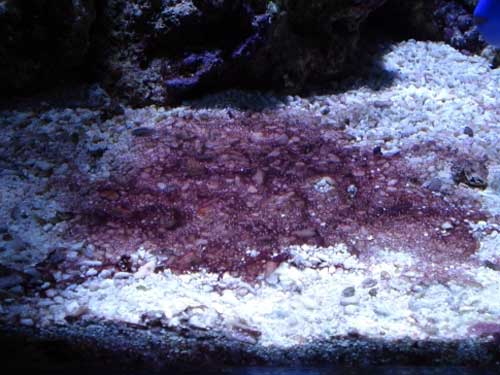
Red slime algae is actually not a "true" algae at all, but classified as a Cyanobacteria.

Cyano is a hybrid, a mixture between plant and bacteria. It has therefore plant, as well as bacterial characteristics and is considered the evolutionary link between plants and bacteria.  Starting out as small patches, it spreads out from there as a mat of sheeting covering.

There are several medications that will get rid of “red slime” but that is treating the symptom and not the cause of the algae.

Good aquarium maintenance and changing your pre filter and carbon on a regular basis will keep the “red slime” away.  Also making sure you have the correct lighting and that your bulbs are not out of date.  Deep Sea Aquarium Maintenance has been taking care of “red slime” problems in Southern California for over a decade.  Call us today for a free estimate. 562 477-2219

Monday, June 6, 2011

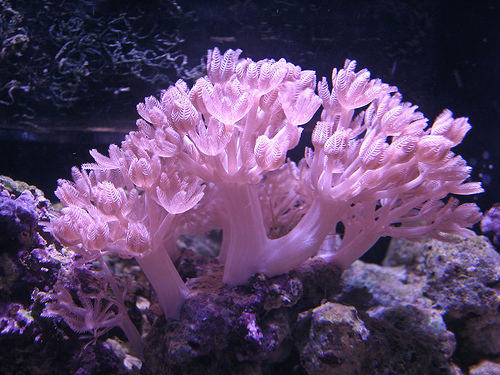
How to frag Pulsating Xenia - Deep Sea Aquarium Maintenance - Long Beach


Deep Sea Aquarium Maintenance feels the propagation and aquaculture of corals is extremely important to the reef aquarium hobby. Propagation helps to preserve and limit what is harvested from natural reefs in the wild.


Fragging Pulsating Xenia:

1. Locate a larger established polyp.
2. Cut close to the stalk's connection with the rock.
3. Put the cutting into the dish.
4. Take the cutting and cut it half into smaller pieces (a two inch colony would be cut four times.)
5. Take the mesh and cut it to an aporpiate size to the rock enough to rubber ban the mesh to the rock.
6. Take rock and the xenia colony and put the mesh over the colonies, make sure the polyps are facing up through the nets.
7. Rubber ban the mesh around the rock.
8. Quickly take your new colony and put it back into the main tank.

Note: It will look bad for a while, brown and purple pale look to it, give it about two weeks or more and you will have a two inch tall stock and polyps pulsing!!!

Friday, May 27, 2011

Have an algae problem in your pond?

Summer is here and is your pond looking as good as it could be?
The two most common forms of algae that ponds experience are planktonic algae and filamentous algae. Planktonic algae is the type that gives pond that distinctive pea green, soupy color.

The second type of algae is Filamentous algae which you typically see growing on rocks and floating on the surface in mats. It is the stringy, hair-like algae that you often see in the spring and summer months.

Algae in moderation is good for a pond, but when it becomes over abundant, it can cause severe water quality problems. Algae consumes oxygen at night to continue its life cycle, so when there is a severe outbreak, large amounts of oxygen are consumed and can seriously deplete the dissolved oxygen level in a pond to a point that cause fish kills. Not to mention that fact it does not look good.

Deep Sea Aquarium Maintenance has been servicing ponds for over 15 years and can take care of any algae problem your pond might have. They also specialize in custom water falls and streams.  Call Deep Sea Aquarium Maintenance today for a free estimate. 562 477-2219

Friday, May 13, 2011

Custom Ponds and Water Features in Los Angeles, Orange County, and Long Beach


Unleash the design and construction talent of Deep Sea Aquarium Maintenance for your water feature.  DSAM specializes in custom ponds, waterfalls, streams, indoor water features, and pool side grottos.  We have the experience and expertise to make your dream water feature a reality.  Contact Deep Sea Aquarium Maintenance Today! www.deepseanow.com  or 562 477-2219